supplements & super foods
flax
Flax seeds and flax oil are being rediscovered as true health foods. It is recommended to have a daily tablespoon of flax oil or 2 tablespoons of flax seed meal. Besides being the best vegetarian source of ALA omega-3, flax oil is a good source of omega-6 or linoleic acid (LA). But on this regime I advise having flax seeds as they contain other nutrients that make eating the whole seed superior to consuming just the extracted oil: a high-quality protein, soluble fibre (the combination of the oil and the fibre makes flax seeds an ideal laxative), vitamins B1, B2, C, E and carotene, iron, zinc and trace amounts of potassium, magnesium, phosphorus and calcium. Flax seeds are high in the phytonutrient lignan. Lignans flush excess oestrogen from the body, thereby reducing the incidence of oestrogen-linked cancers, such as breast cancer. Besides their anti-tumour properties, lignans are also antibacterial, antifungal and antiviral.
Foods high in essential fatty acids, such as flax, increase the body’s metabolic rate, helping to burn the excess, unhealthy fats in the body. Eating the right kind of fat gives your body a better chance to store the right amount of fats. This is called thermogenesis, a process in which specialized fat cells throughout the body (called brown fat) click into high gear and burn more fat when activated by essential fatty acids.
TAKE two tablespoons crushed flax seeds in one of your daily smoothies.
psyllium husks
Psyllium is a natural, water-soluble, gel-reducing fibre that is extracted from the husks of blond psyllium seeds (Plantago ovata). The bulking effect of psyllium also works to rid the colon of toxic substances, including heavy metals, as it acts almost as a sponge to soak them off the walls of the intestine. This spongy action has a dual advantage as it can decrease hunger when taken with meals. Since psyllium primarily acts by absorbing water and adding more bulk to the stool, it encourages the normal peristaltic (contracting) action of the bowel. Stimulant laxatives, on the other hand, contain chemicals that cause the intestine to increase the secretion of water. They can often create strong contractions of the colon and, if used in excess, can lead to a loss of normal bowel peristalsis and tone. Psyllium also encourages the growth of healthy, ‘friendly’ intestinal bacteria such as Lactobacillus acidophilous and Bifidobacteria that are helpful in regulating bowel movements.
TAKE one teaspoon psyllium husks added to a daily juice or smoothie.
yogurt
Yogurt disables and kills unwanted bacteria. The probiotics in live yogurt inhibit the formation of cancer-causing compounds, they help to detoxify your body by reducing inflammation and encouraging the elimination of intestinal parasites. Yogurt also stimulates the kidneys, thus aiding digestion. If you want a satisfying tasty smoothie, a few tablespoons of natural live yogurt could be that magic ingredient. Avoid sweetened yogurts as the sugar content counteracts any beneficial effect as it is antagonistic to the B vitamins that are made from the bacteria naturally found in yogurt.

fish liver oils
Fish oils (especially cod liver oil) are rich in the EPA and DHA omega-3. These are biologically more potent than the ALA omega-3 in flax seeds. Experimental studies suggest that 3–4 g of ALA per day is equivalent to 0.3 g (300 mg) of EPA per day. EPA and DHA are more rapidly incorporated into plasma and membrane lipids and produce effects more rapidly than does ALA. If you have relatively large reserves of omega-6 linolenic acid in your body fat (the result of a poor diet high in processed and fried food), these tend to slow down the formation of long-chain omega-3 fats like EPA and DHA from ALA.
Is it any coincidence that according to the World Health Organization, the areas of the world with the highest levels of obesity and mortality rates due to degenerative diseases are the same ones whose inhabitants have the highest level of ‘body burden’ due to toxic overload?
Incorporating a good-quality fish oil supplement will be beneficial to your diet, as it also provides you with a rare dietary form of vitamin D – essential if you have minimum exposure to natural sunlight. And, considering the concerns over high mercury levels in both sea and freshwater fish, refined fish oil supplements may be considered a safer option for your health.
Do check with your doctor if you are taking immune system suppressants or cholesterol-reducing medication as certain types cannot be mixed with fish oil supplements.
TAKE the recommended daily dose for adults – usually one capsule (depending on the brand).
soya
Soya products contain vitamins and minerals in a natural relationship that is complementary to the human body’s needs. They are high in isoflavones, which mimic the action of the female sex hormone ooestrogen (good for menopausal women), reduce insulin levels, decrease arteriosclerosis and lower levels of LDL – bad cholesterol. Soya can help lower the risk of cancer, relieve constipation, regulate blood sugar and is a major source of protein in vegetarian diets. Try incorporating soya milk, yogurt, ice cream and tofu into creamy fruit-based smoothies.
milk thistle
Milk thistle or silymarin, is believed to have protective effects on the liver and improve its function. It is typically used to treat liver cirrhosis, chronic hepatitis (liver inflammation) and gallbladder disorders. It is an antioxidant, assists in liver cell regeneration and is used after exposure to chemical and industrial pollutants or adverse effects from excess alcohol or fat consumption. This herb’s liver-strengthening properties make it a good supplement to support a juice diet, especially if you think your liver may be over-taxed and in need of a little extra nurturing.
TAKE the recommended daily dose for adults.
seeds and nuts
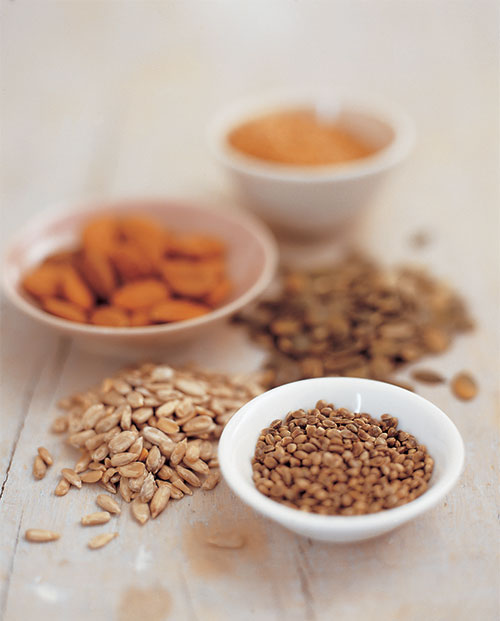
Seeds can be thrown into smoothies for super boosts of a whole host of vital nutrients. Flax seeds, sesame, pumpkin and sunflower seeds are rich in protein, A, D, E and B complex vitamins, as well as minerals and unsaturated omega-3 fatty acids. Because of their oil contents they should be kept in the refrigerator or the oils will oxidize, spoiling their taste and nutritional value.
Nuts are a concentrated food source. They are full of protein, vitamins, unsaturated omega-3 fatty acids and minerals, especially selenium and are an effective antioxidant. They reduce levels of bad cholesterol and contain anti-cancer and heart protective qualities. Add freshly ground nuts to smoothies for extra flavour and nutrition.
ginger and garlic
Ginger is a fantastic ingredient, long used by Asians for chest congestion, colds, diarrhoea and nausea. It is naturally antibiotic and anti-inflammatory and boosts HDL – good cholesterol. It has also been attributed with antidepressant powers. It strengthens the immune system and can add anything from gentle warmth to fiery heat, depending on how much you throw into the blend.

Garlic is a member of the onion family and has been called the ‘wonder drug’. It is truly one of the world’s oldest medicines. Raw garlic is a powerful antibiotic that fights bacteria, parasites and viruses. Two to three cloves a day lessens the chance of heart attacks and strokes, and garlic contains many anti-cancer compounds including allylic sulphides. It boosts immunity, lowers cholesterol and blood pressure. It is at its most powerful when raw, although still potent when cooked. Add a raw clove or two into savoury juices for a real health kick.
brewer’s yeast
Brewer’s yeast (Saccharomyces cerevisiae) is inactive yeast, meaning the yeasts have been killed and have no leavening power. It is the yeast remaining after beer-making and is used as a nutrient supplement to increase the intake of B vitamins. Brewer’s yeast is rich in many basic nutrients such as B vitamins, amino acids and at least 14 different minerals. The protein content of yeast is responsible for 52 per cent of its weight. Because of its B vitamin content it is a great physical and mental energy boost between meals. It helps metabolism, is good for eczema, heart disorders, gout, nervousness and fatigue. Brewer’s yeast comes powdered (the most potent form), in flakes and in tablets. It can be added to drinks, sprinkled over food or eaten alone. Make sure you use brewer’s yeast and not active baker’s yeast as they are totally different in their functions.
Because of its high phosphorus content it is not recommended for people suffering with osteoporosis. If you are taking large amounts of yeast you should make sure to get adequate calcium in the diet. Supplementation of one tablespoon of brewer’s yeast a day should be enough. Also avoid brewer’s yeast if you have a chronic yeast problem (systemic candidiasis).
TAKE the recommended daily dose for adults, depending on the brand.
When buying supplements such as milk thistle and brewer’s yeast, buy as good quality as you can afford. Bulk buying may seem like a good idea but it can be a false economy because the ingredients may be inferior and lessen the effectiveness of the supplement over time. For maximum freshness, keep all supplements refrigerated in their jars.